Project Build Story
项目构建故事
Why We Built ORBIT, How We Built It, and What We Think It Proves
我们为什么构建 ORBIT、如何实现它,以及它证明了什么
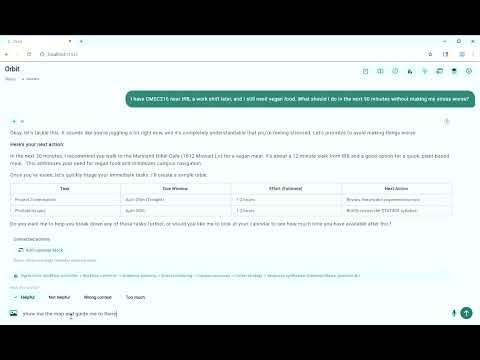
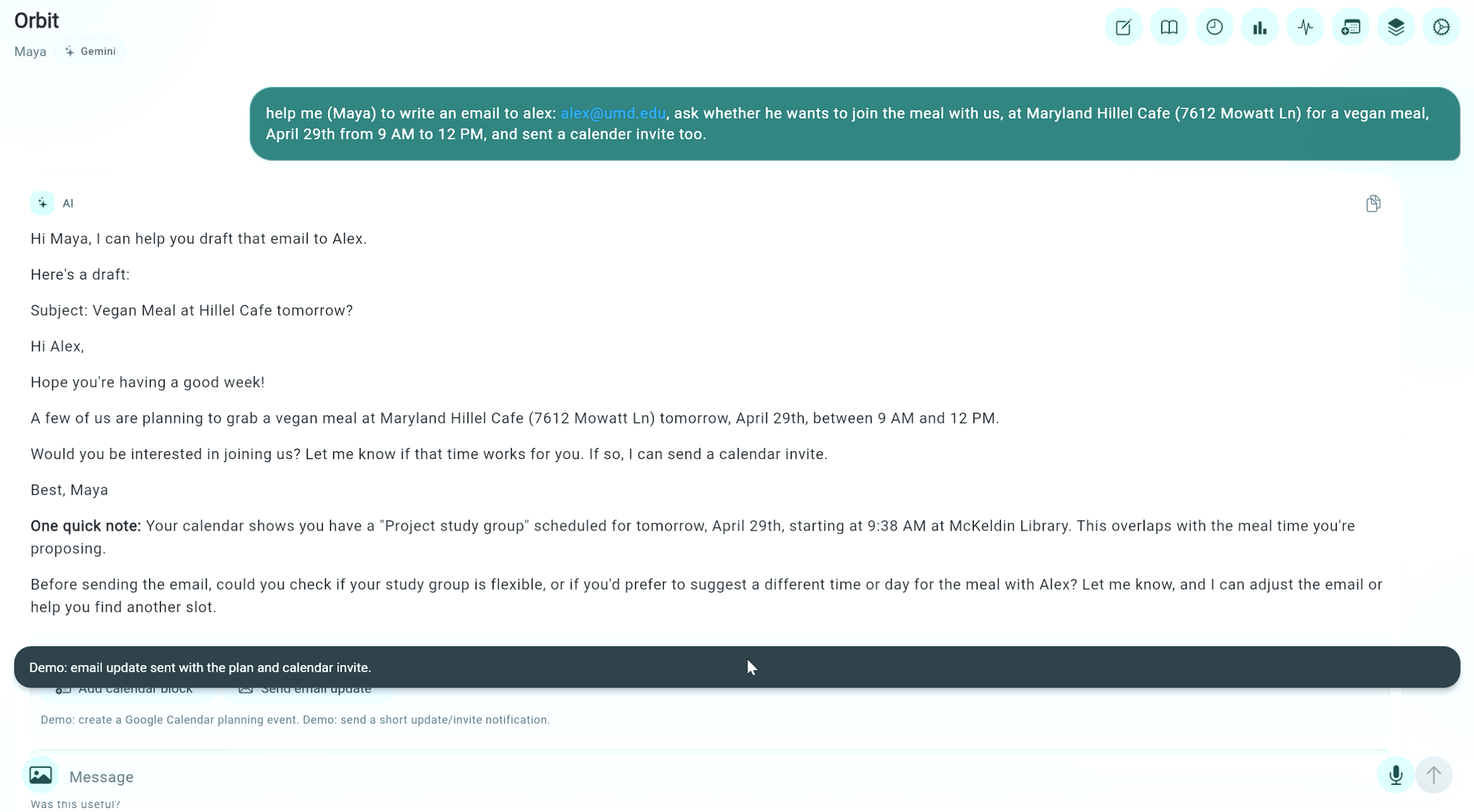
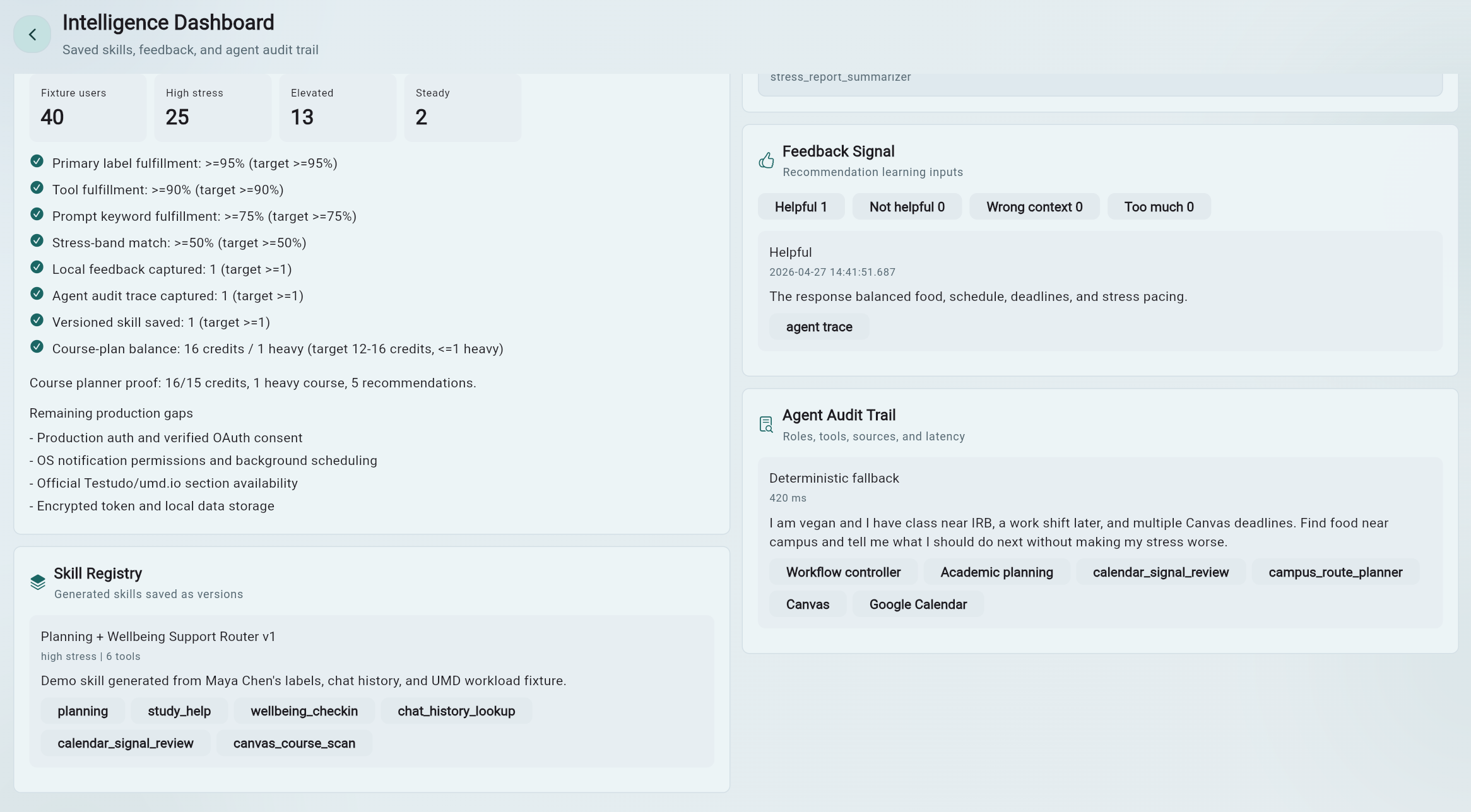
When we started thinking about ORBIT, we were not only thinking about building another AI chatbot. As CS and NLP students, we have used a lot of AI tools, and we think many of them are impressive in a very technical sense. They can summarize, write, code, and answer questions quickly. However, what made us pause was that most of these tools still begin from a blank prompt. They do not really understand the messy environment around a student.
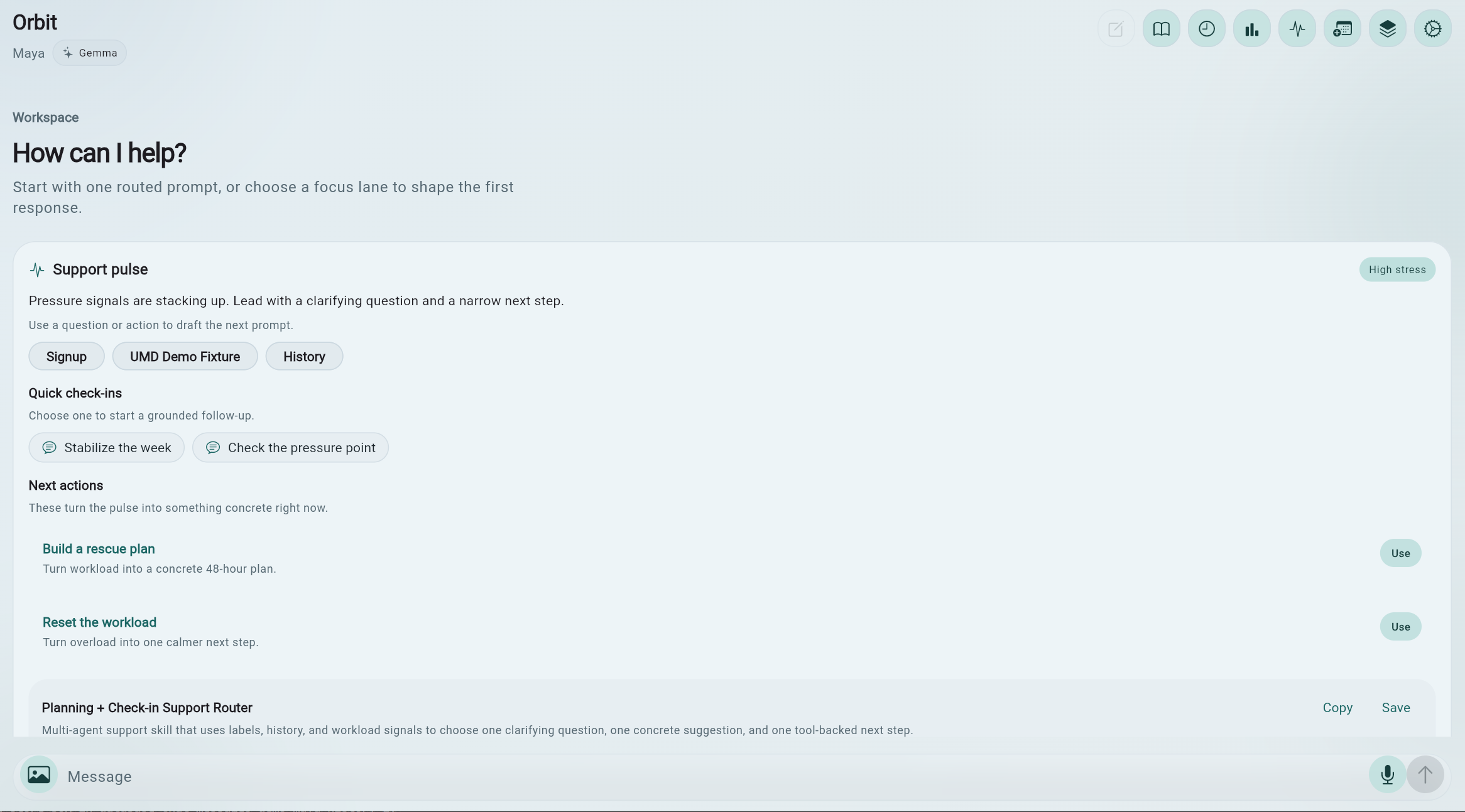
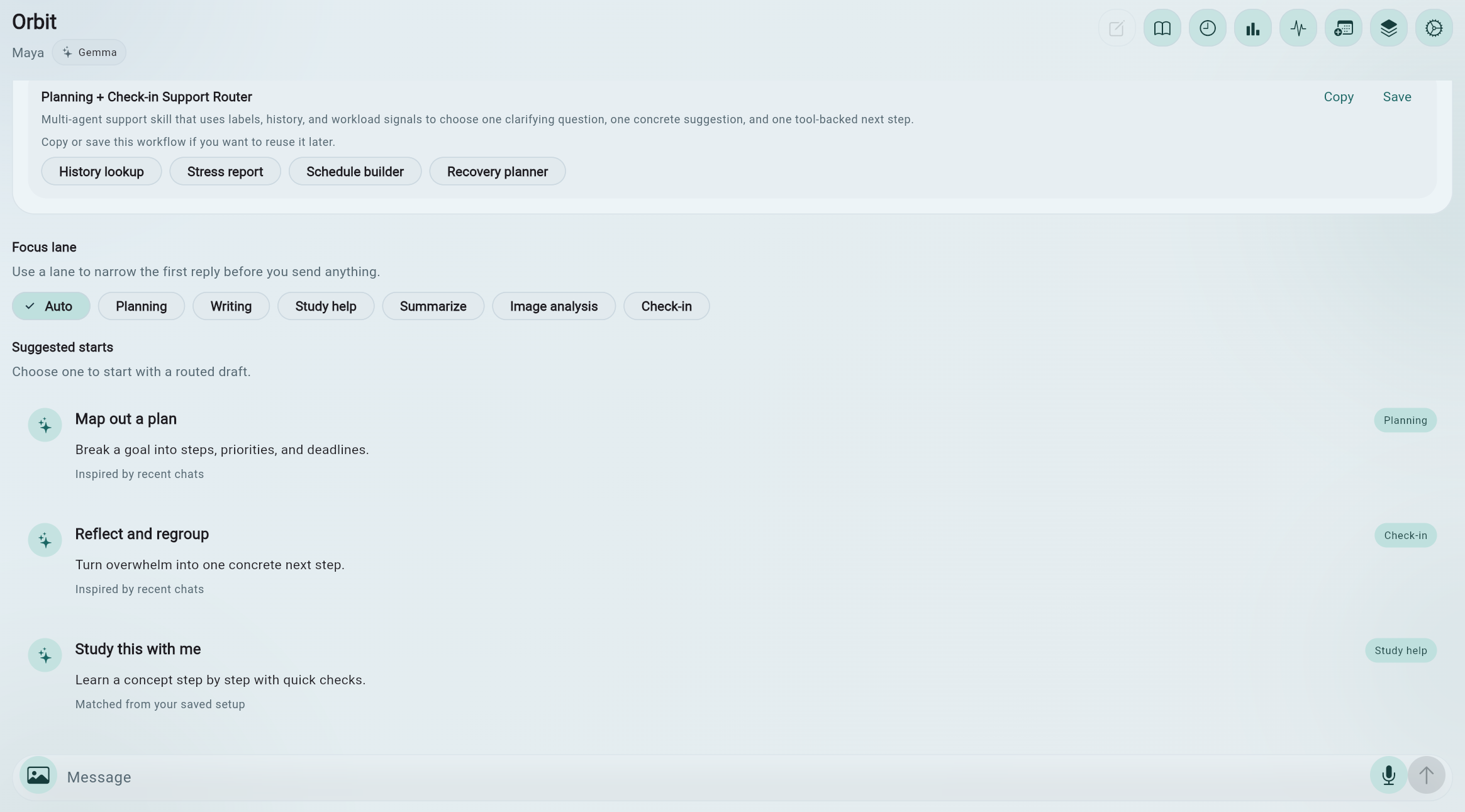
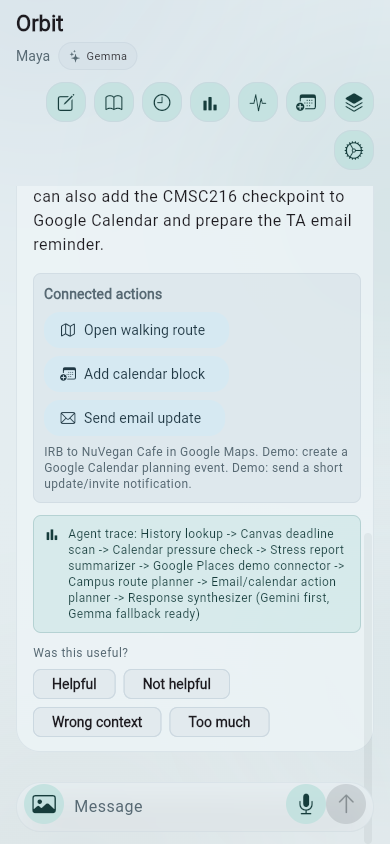
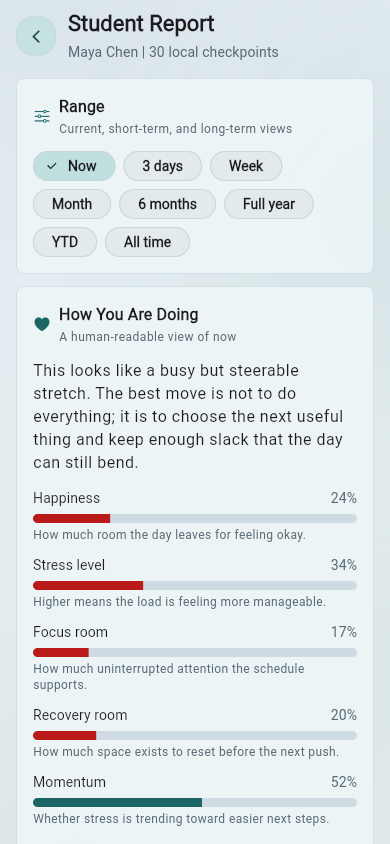
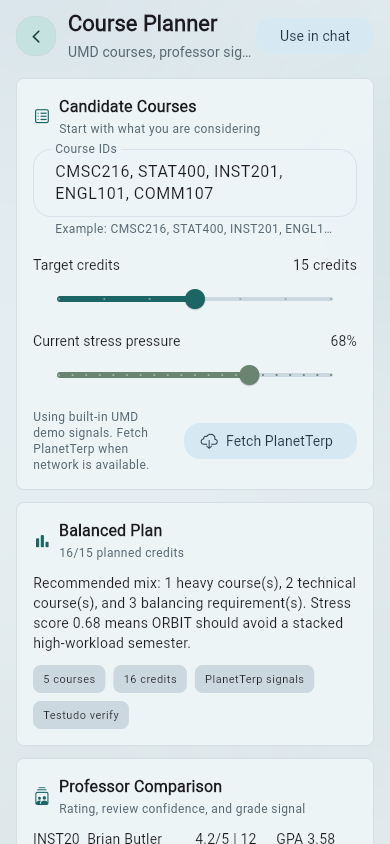
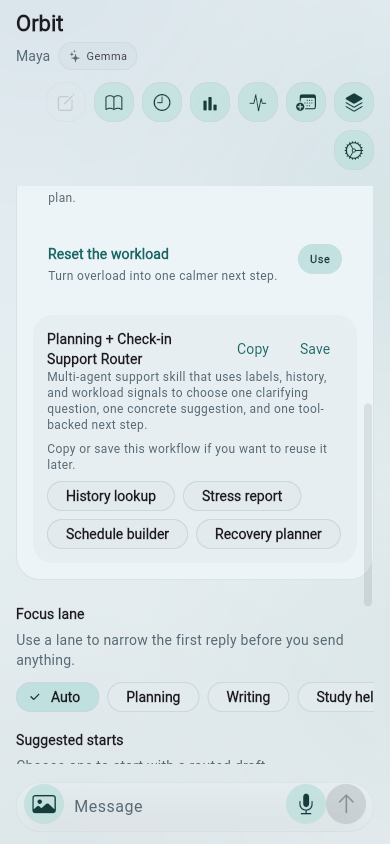
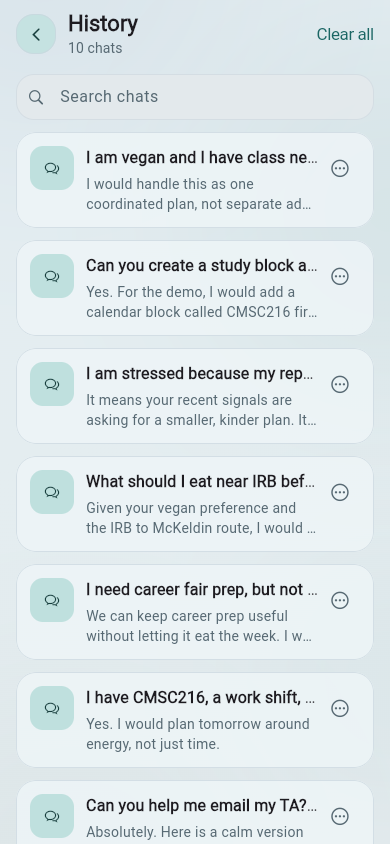
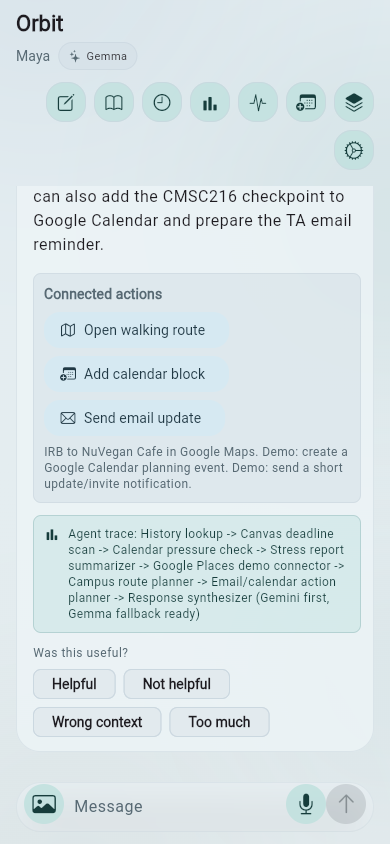
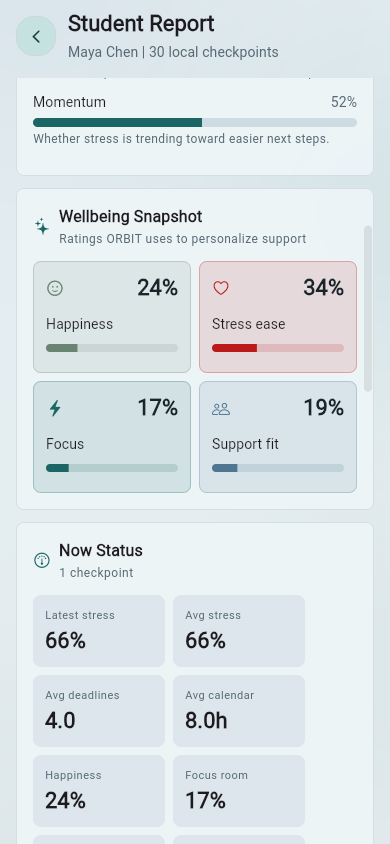
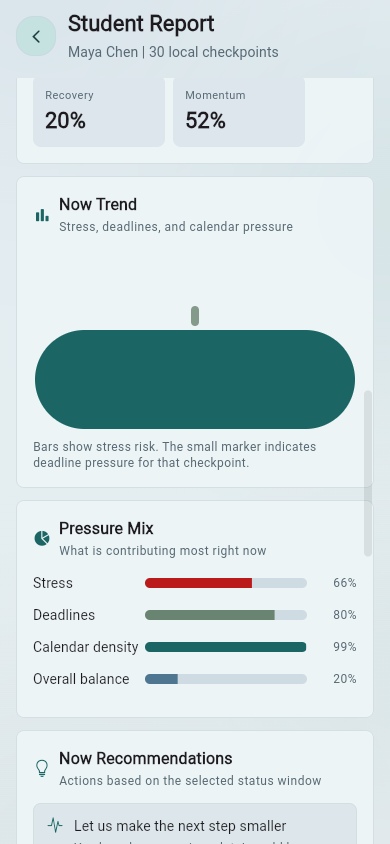
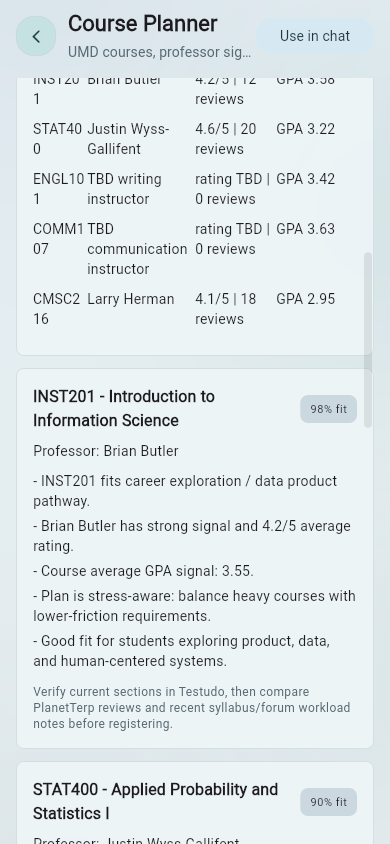
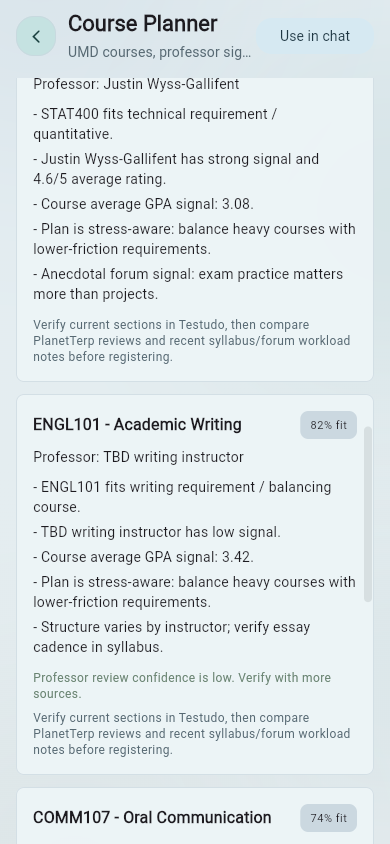
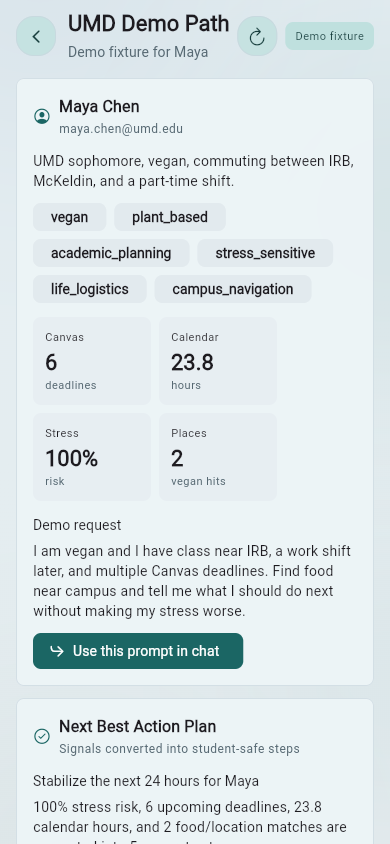
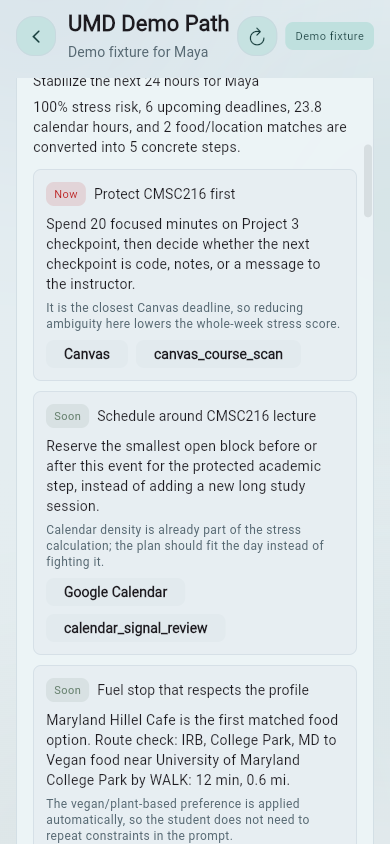
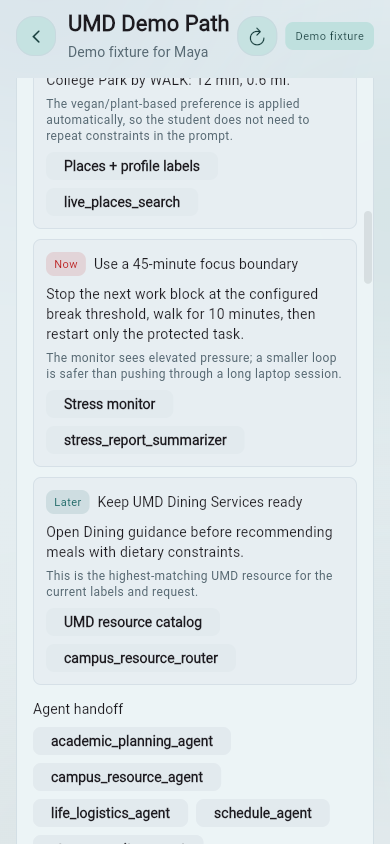
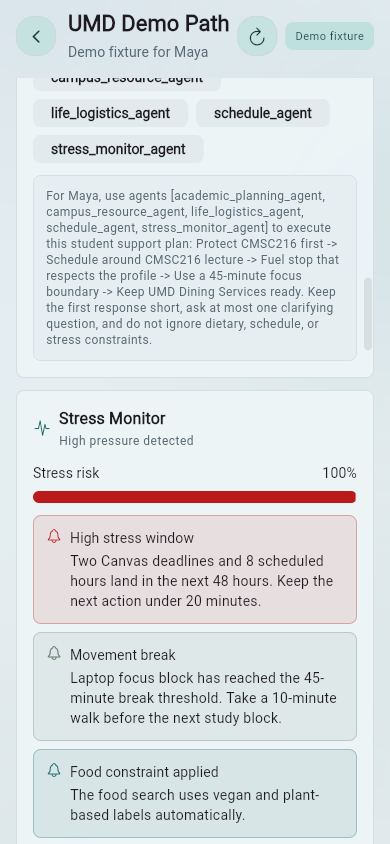
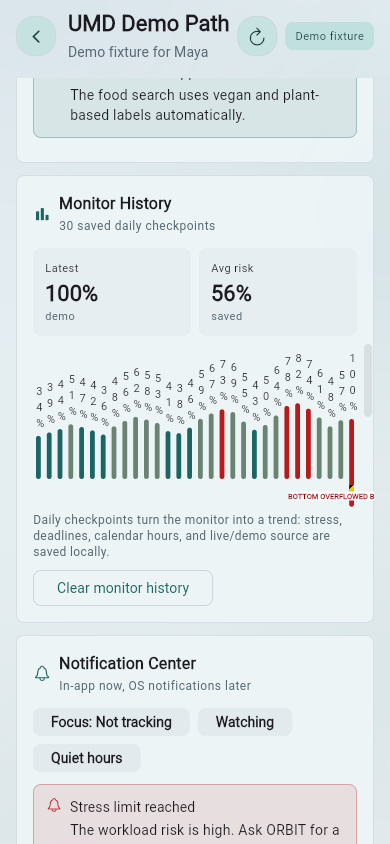
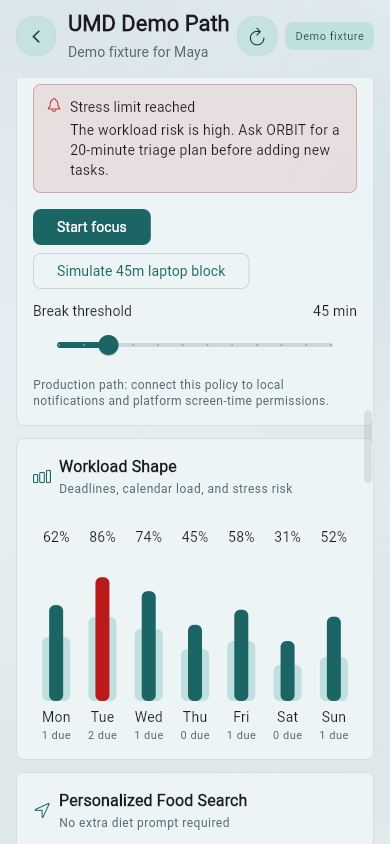
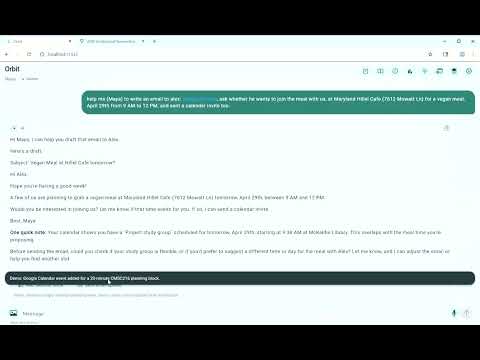
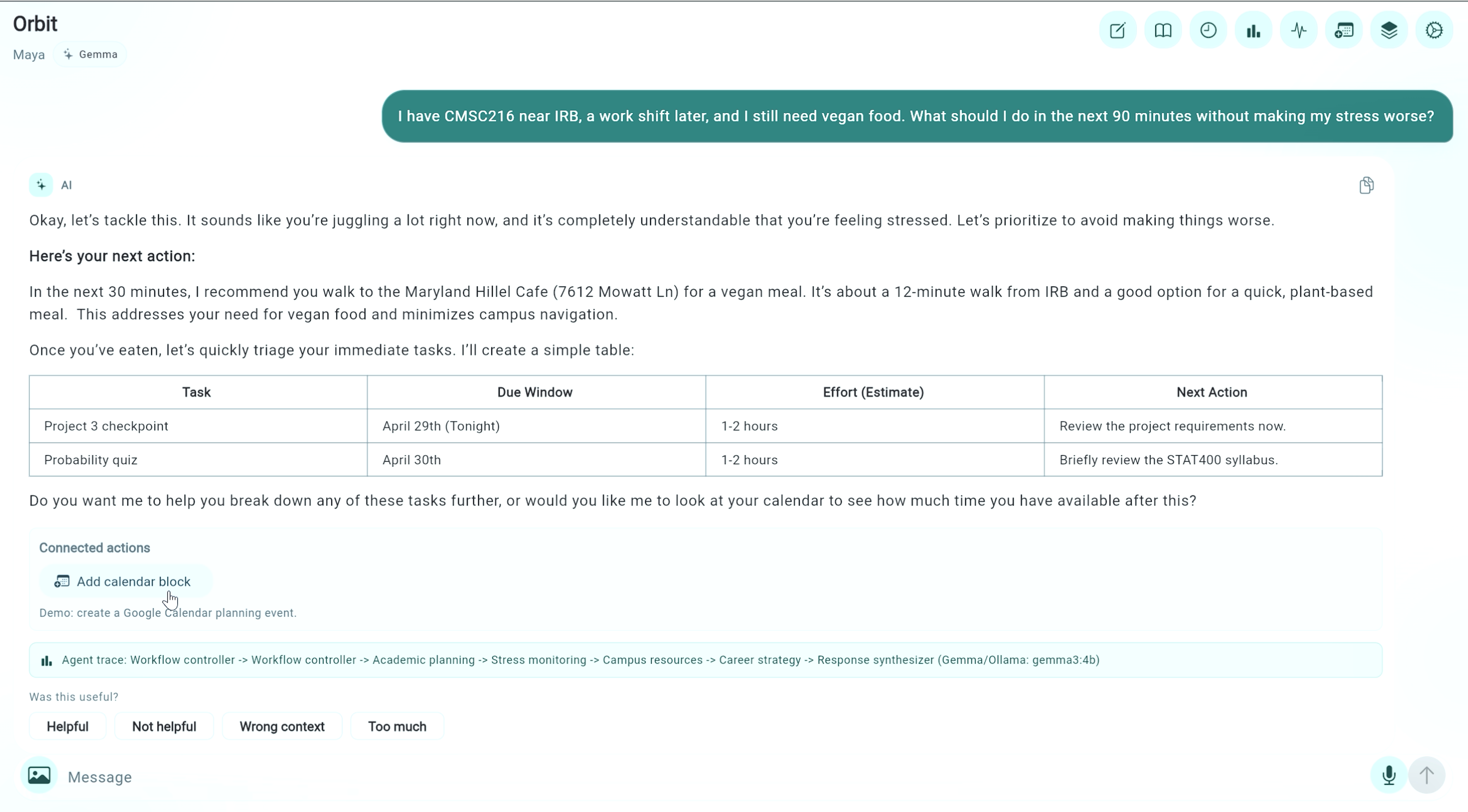
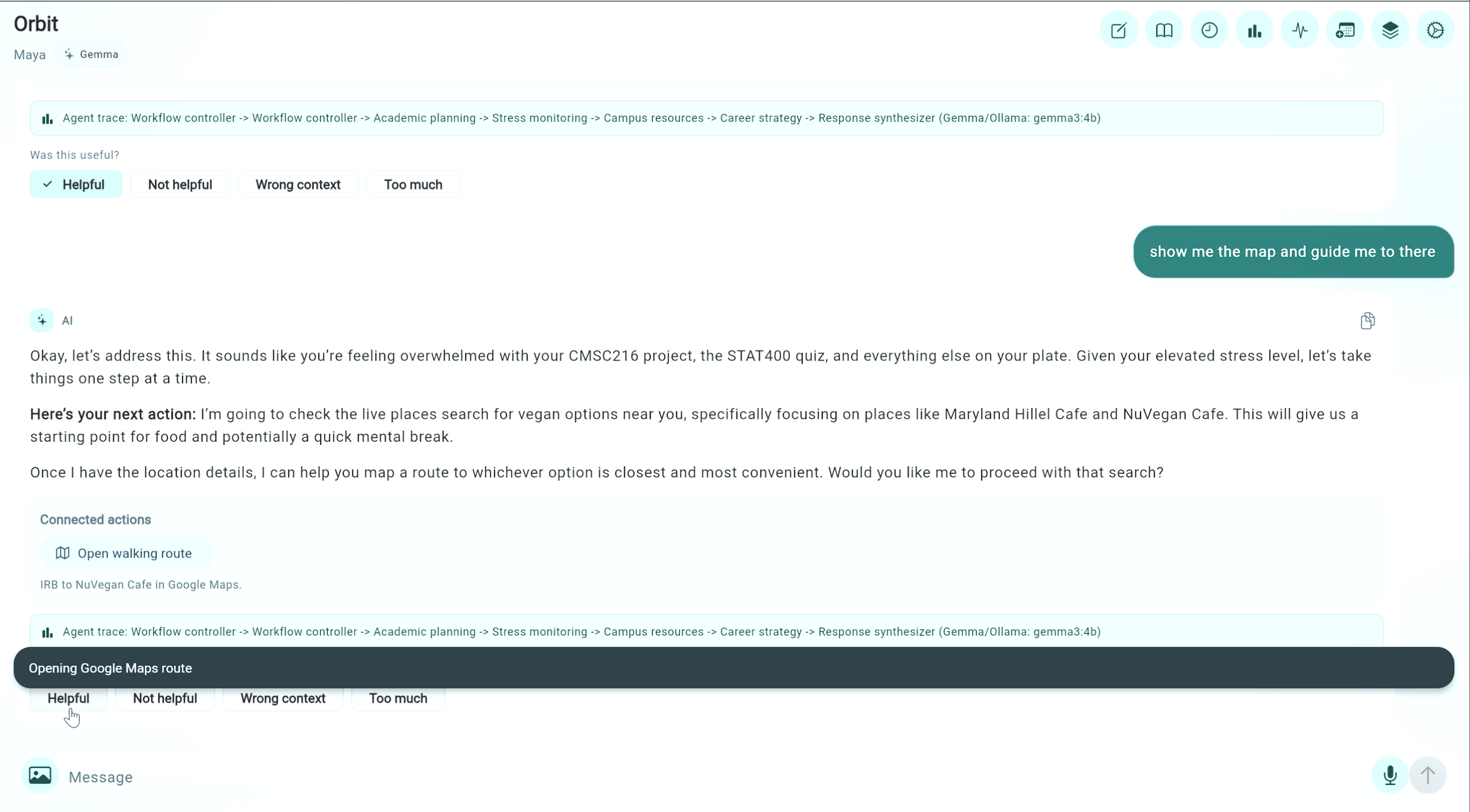
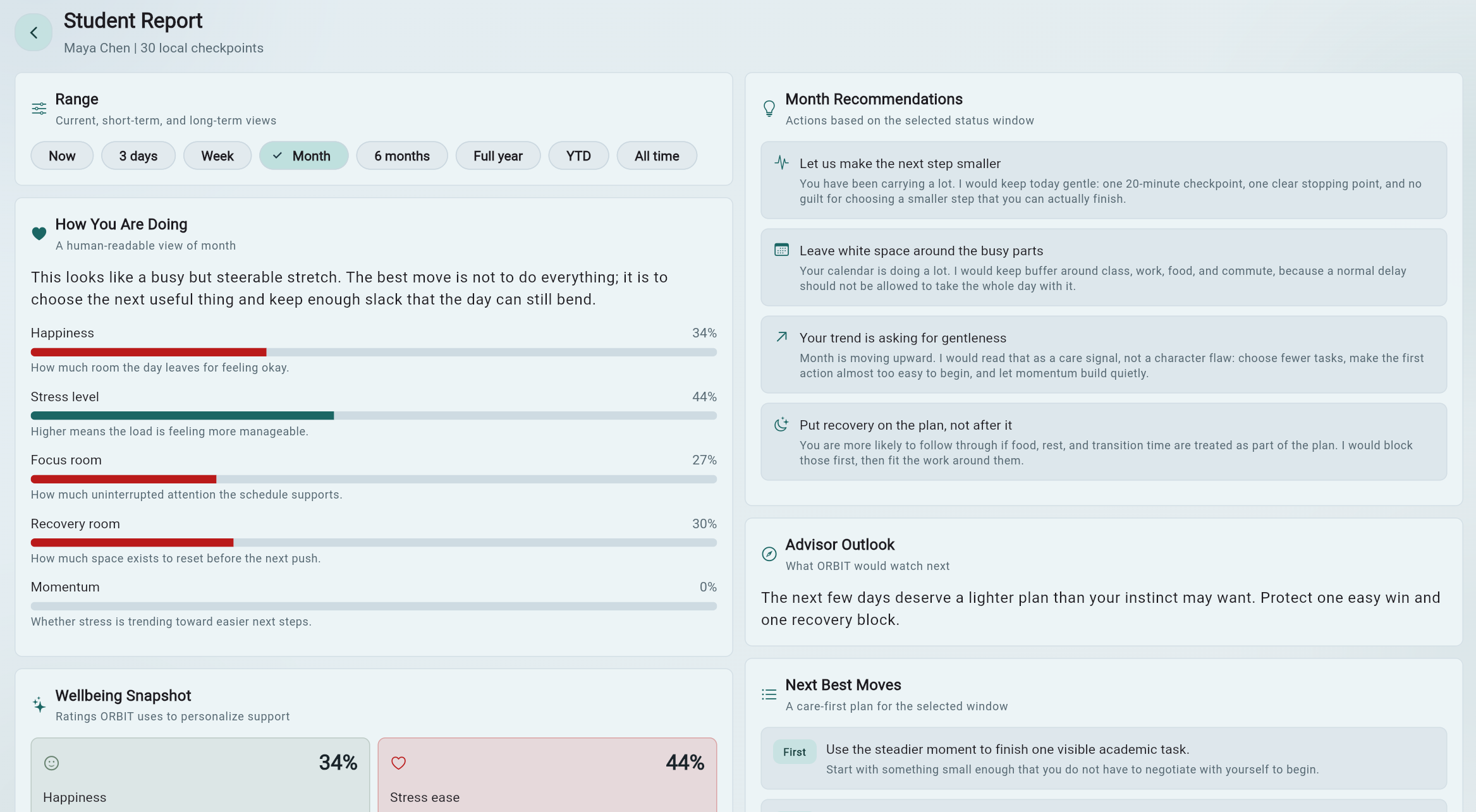
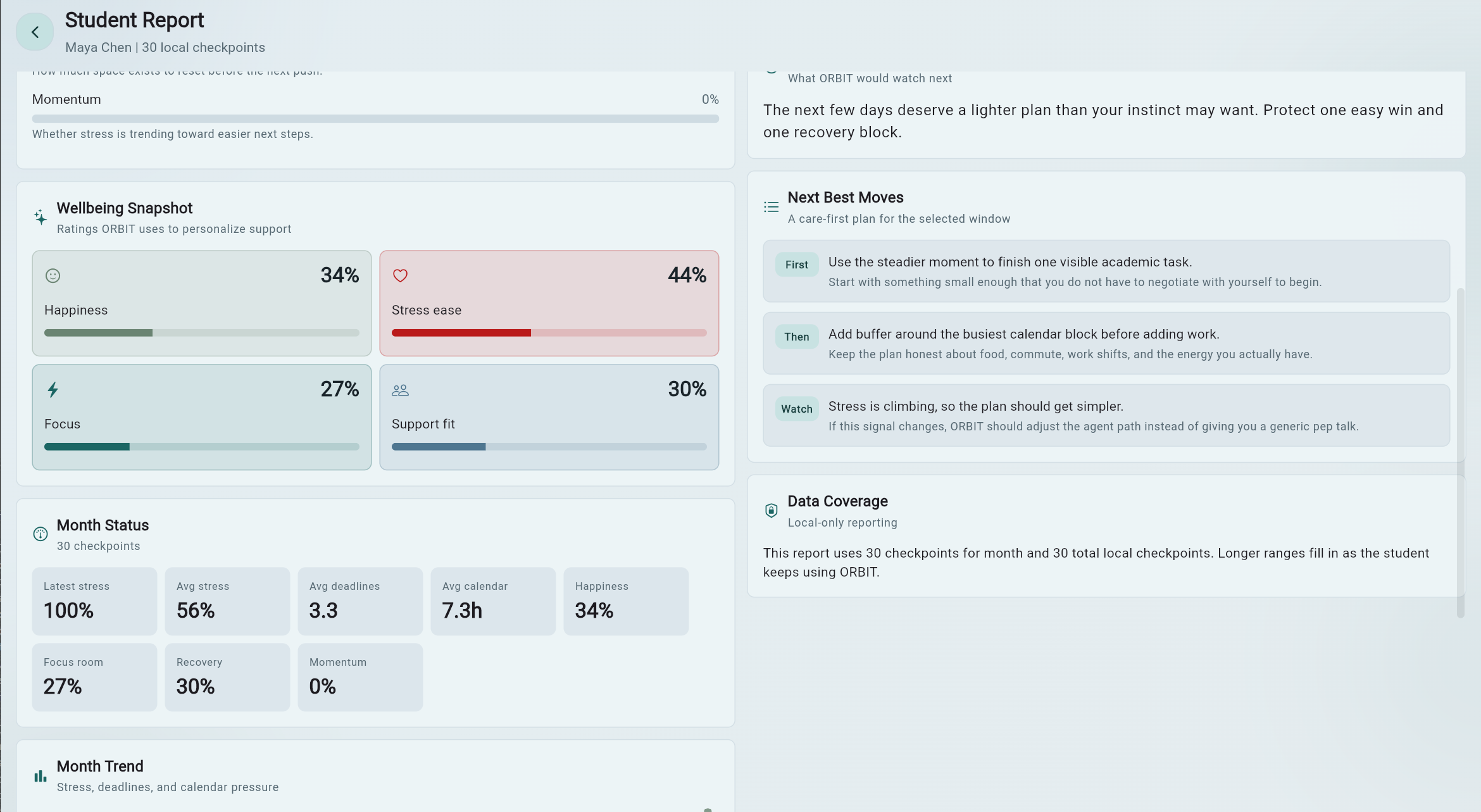
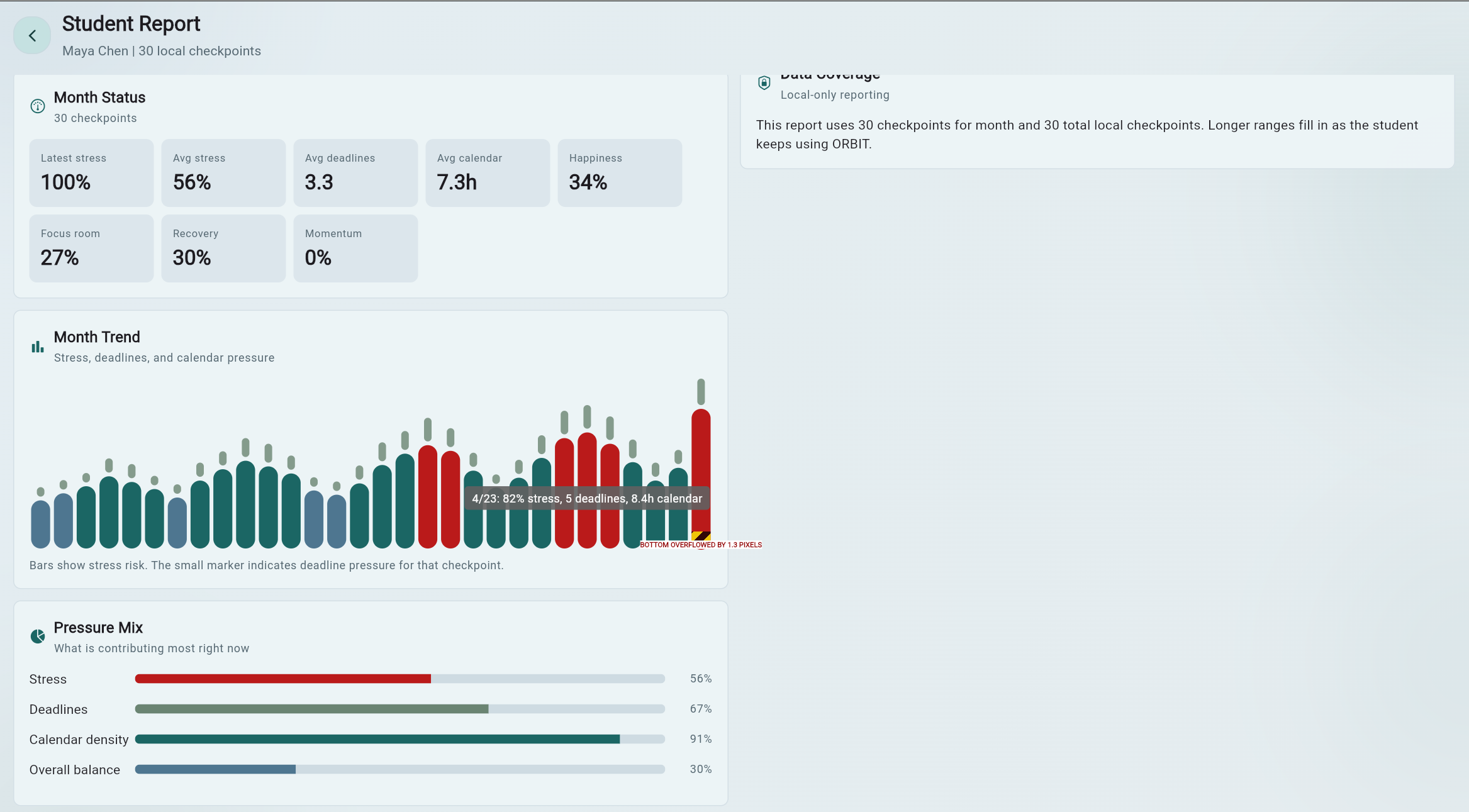
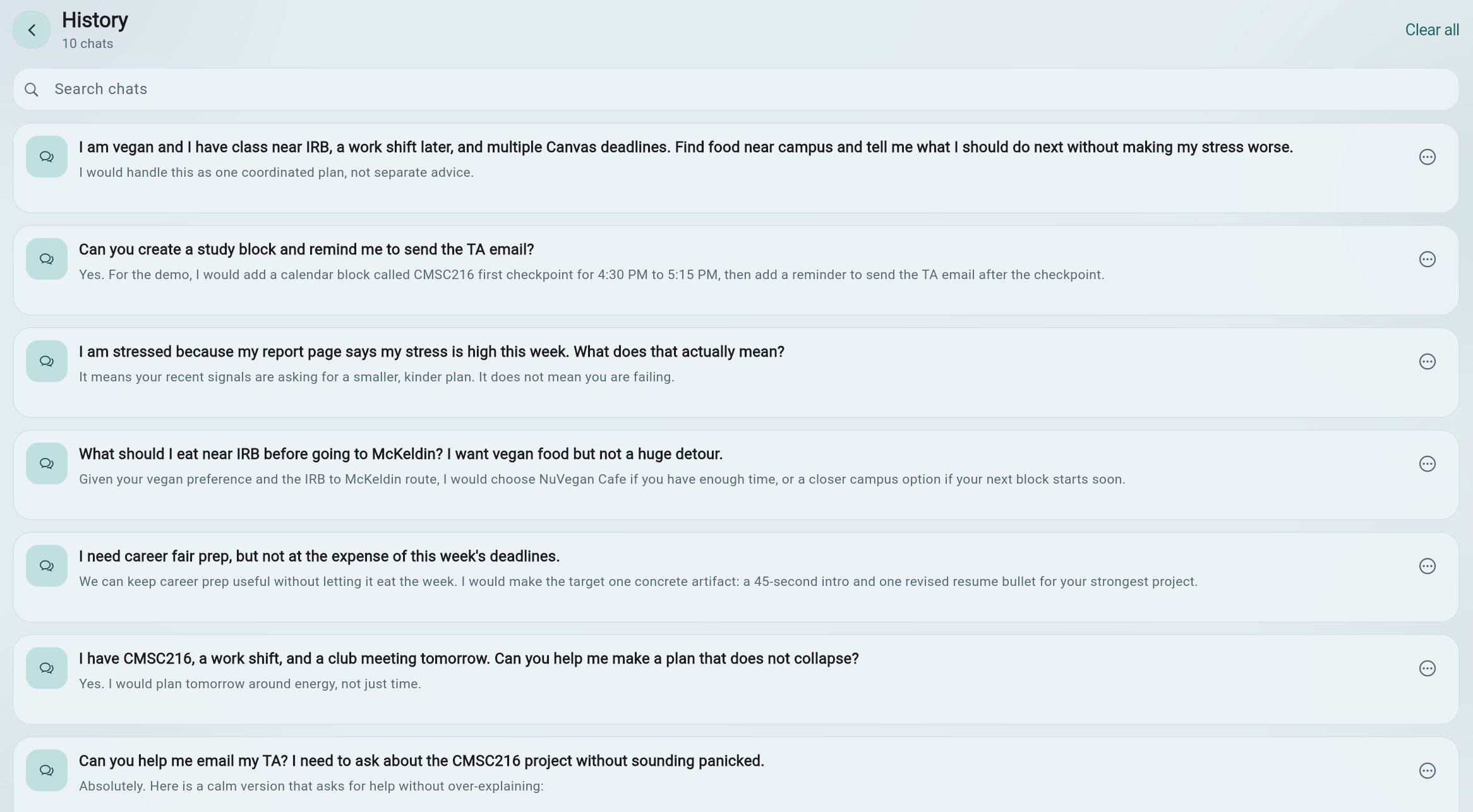
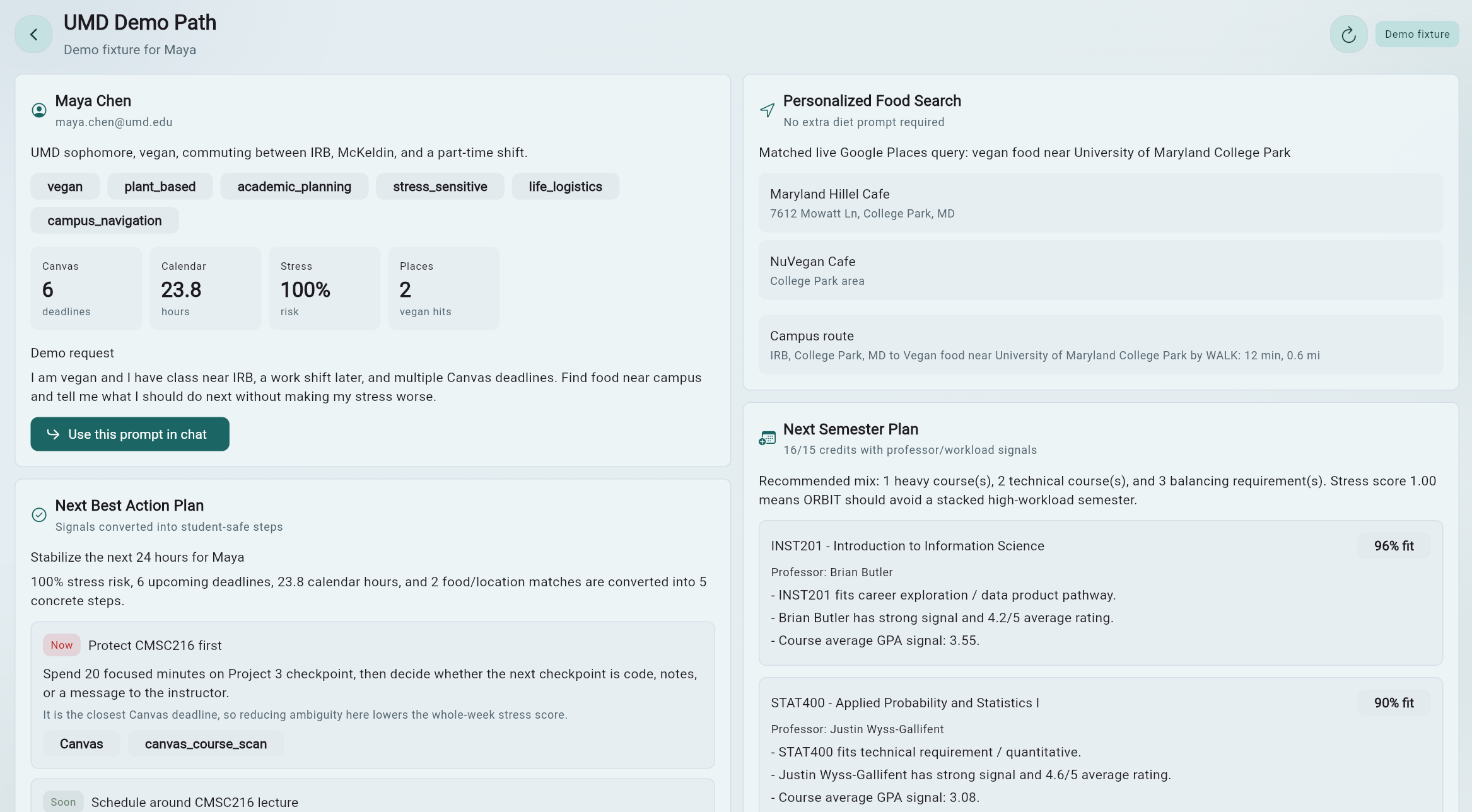
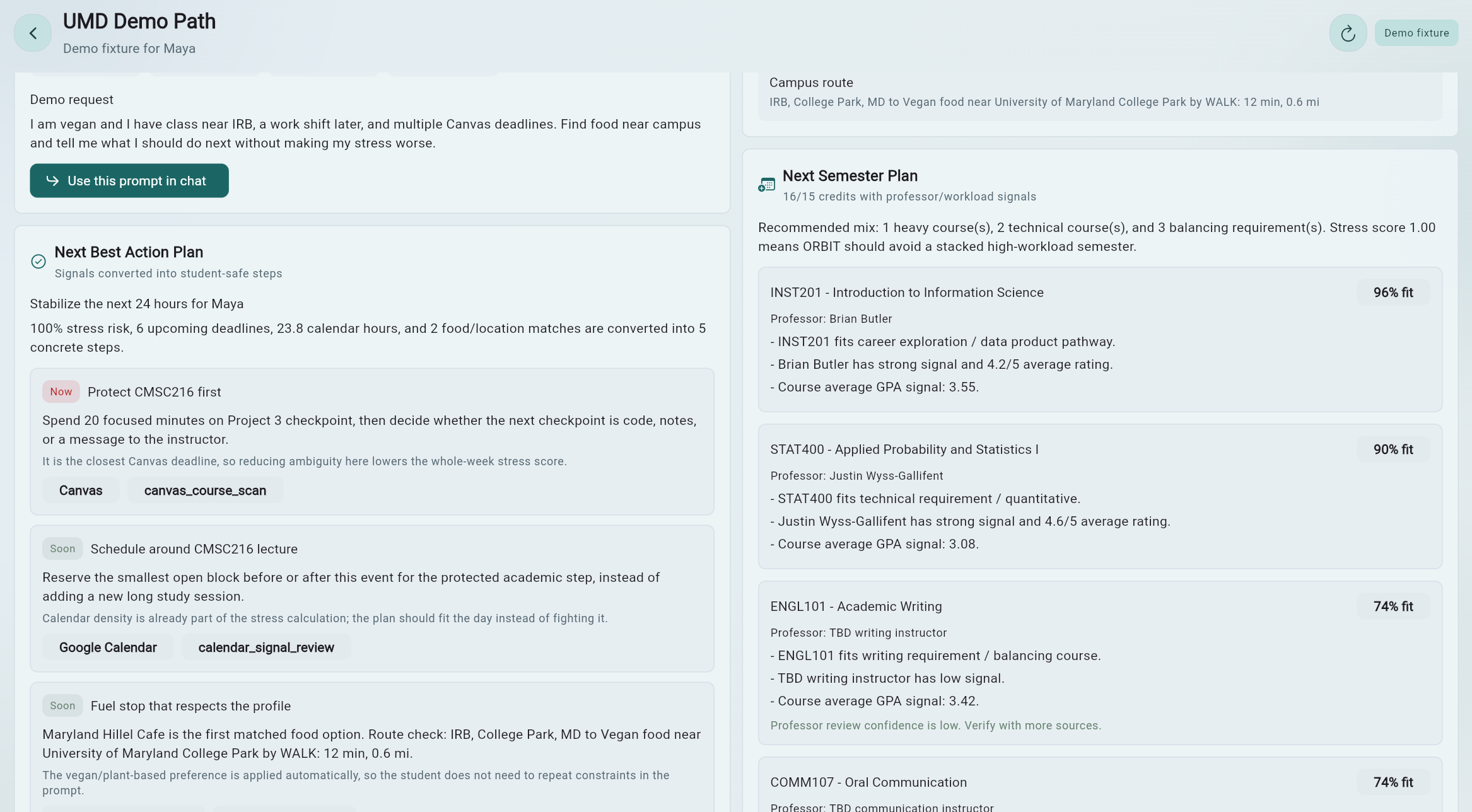
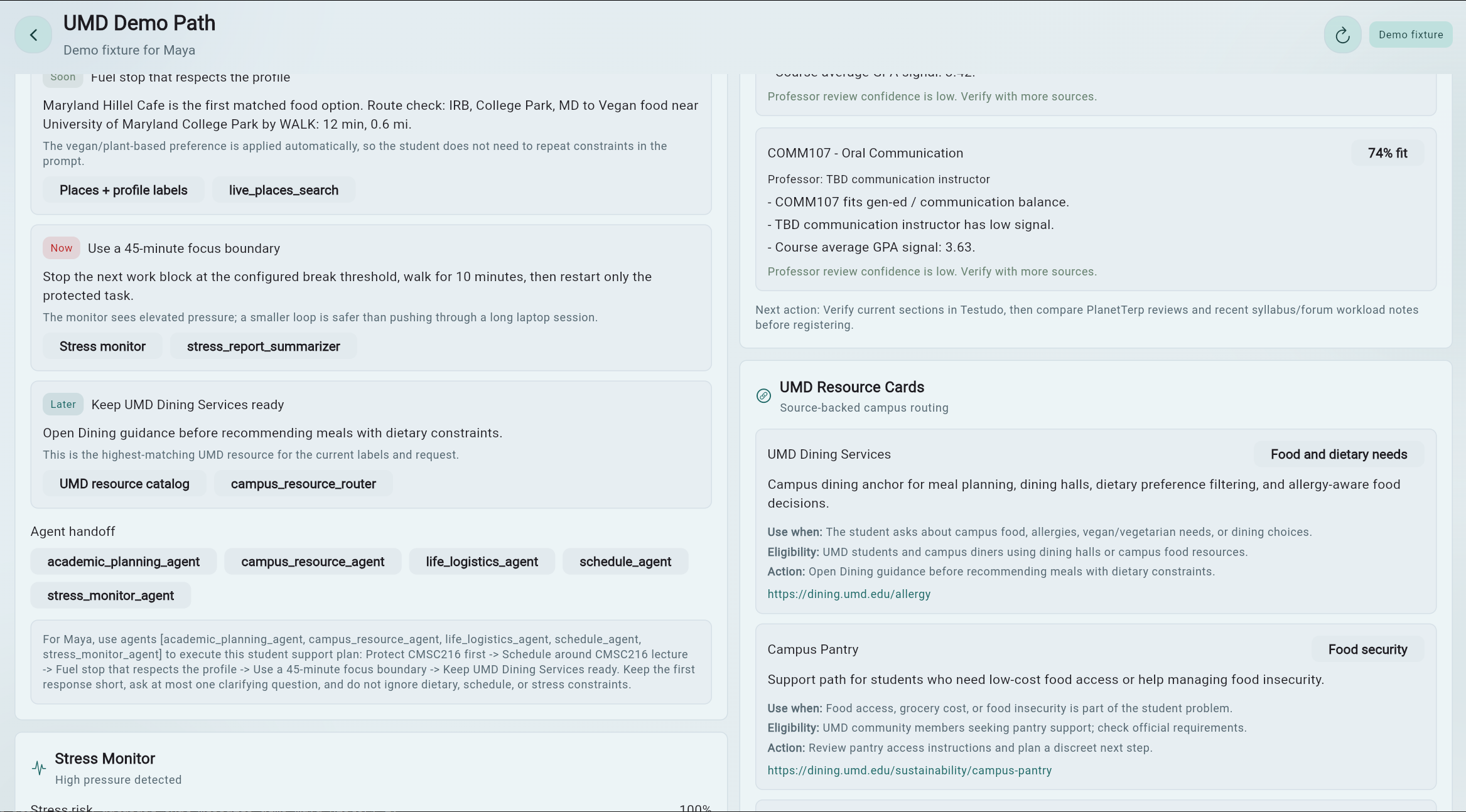
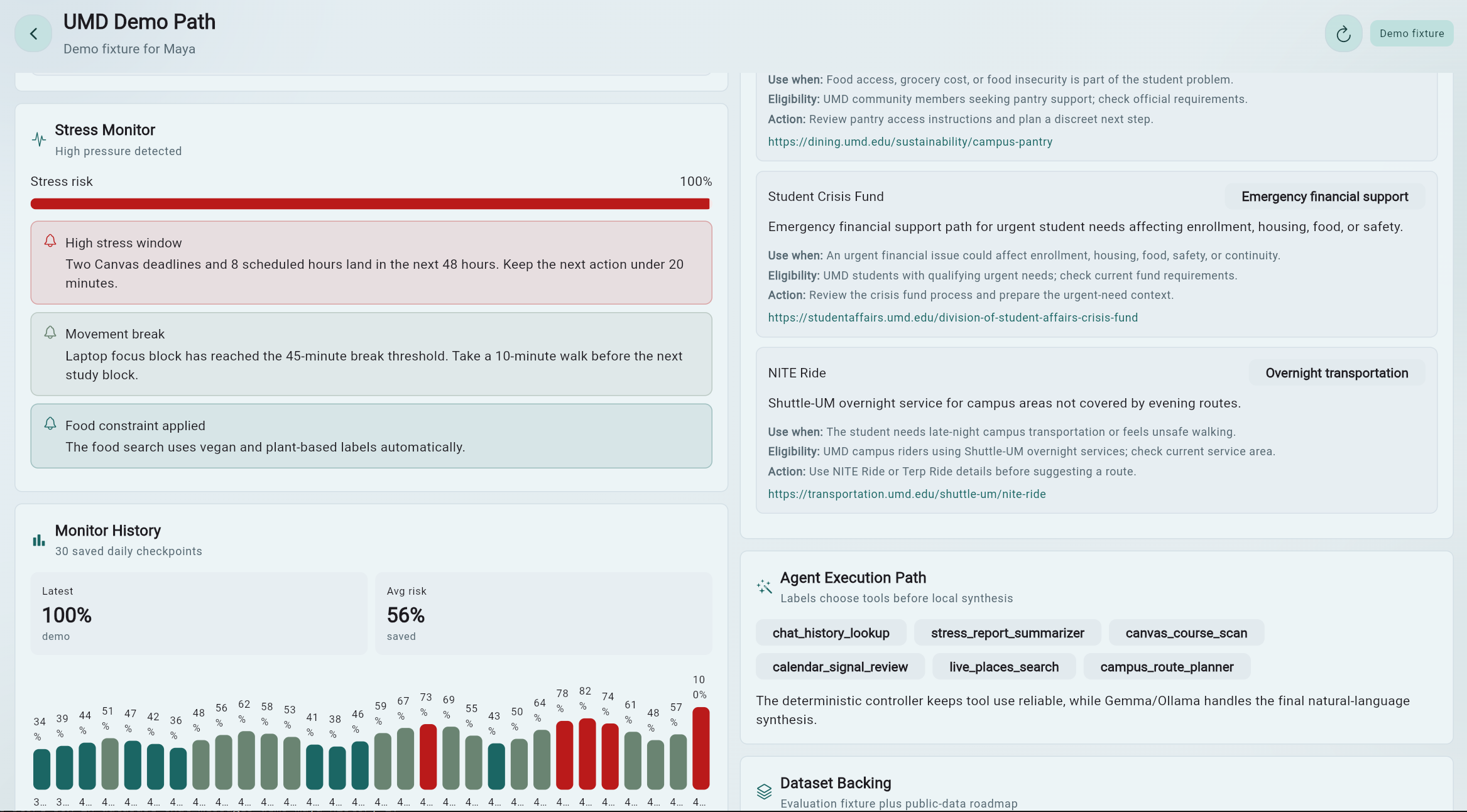
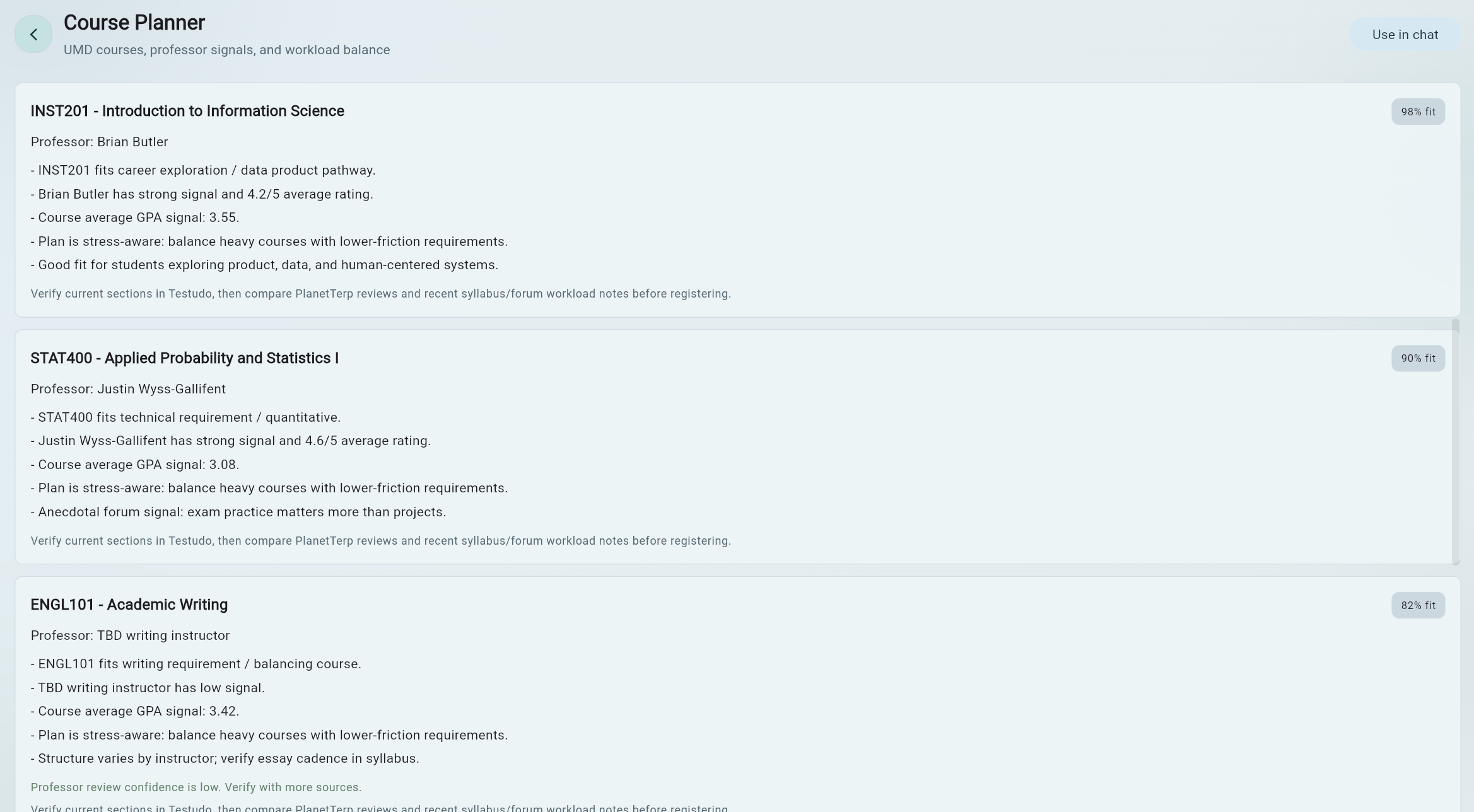
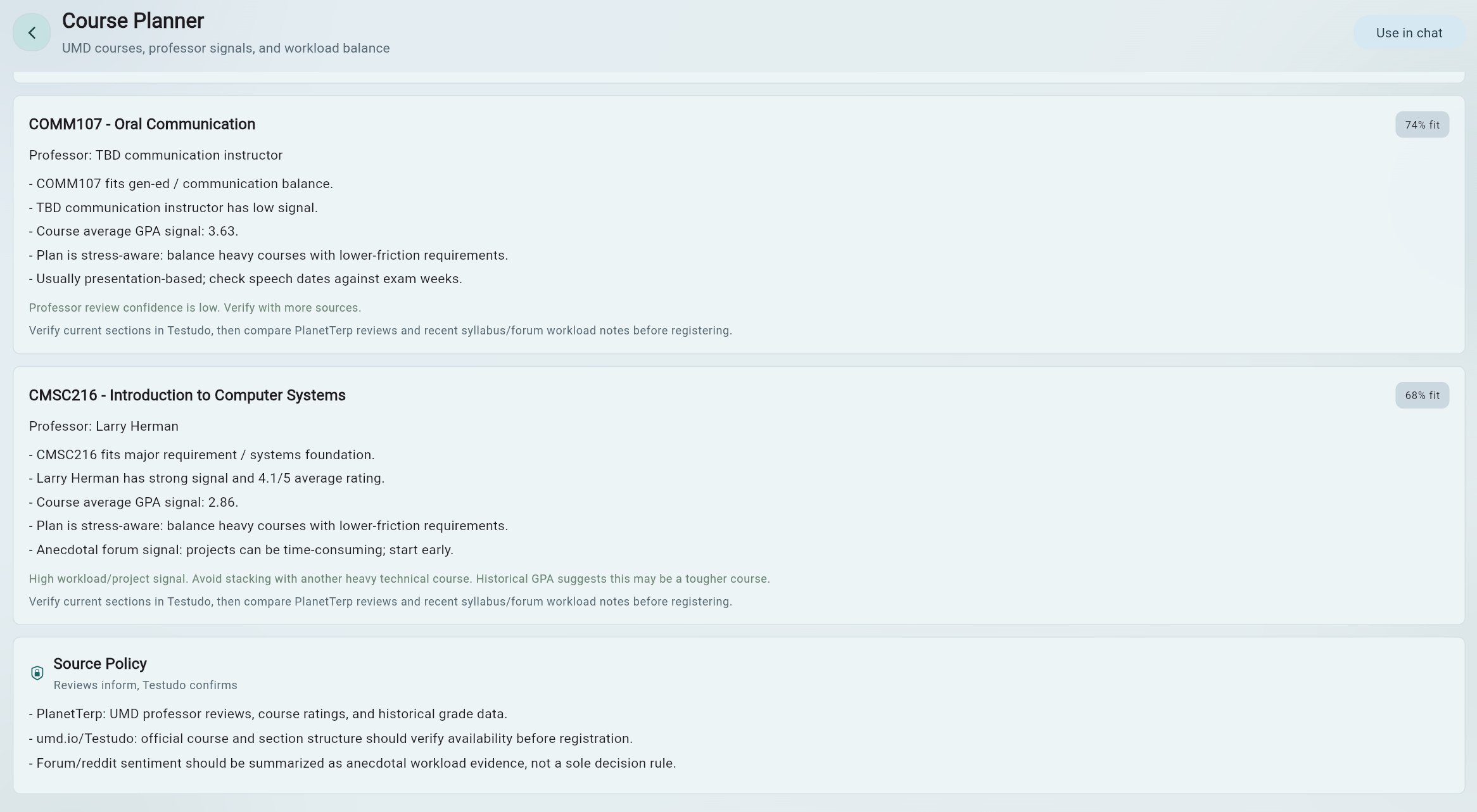
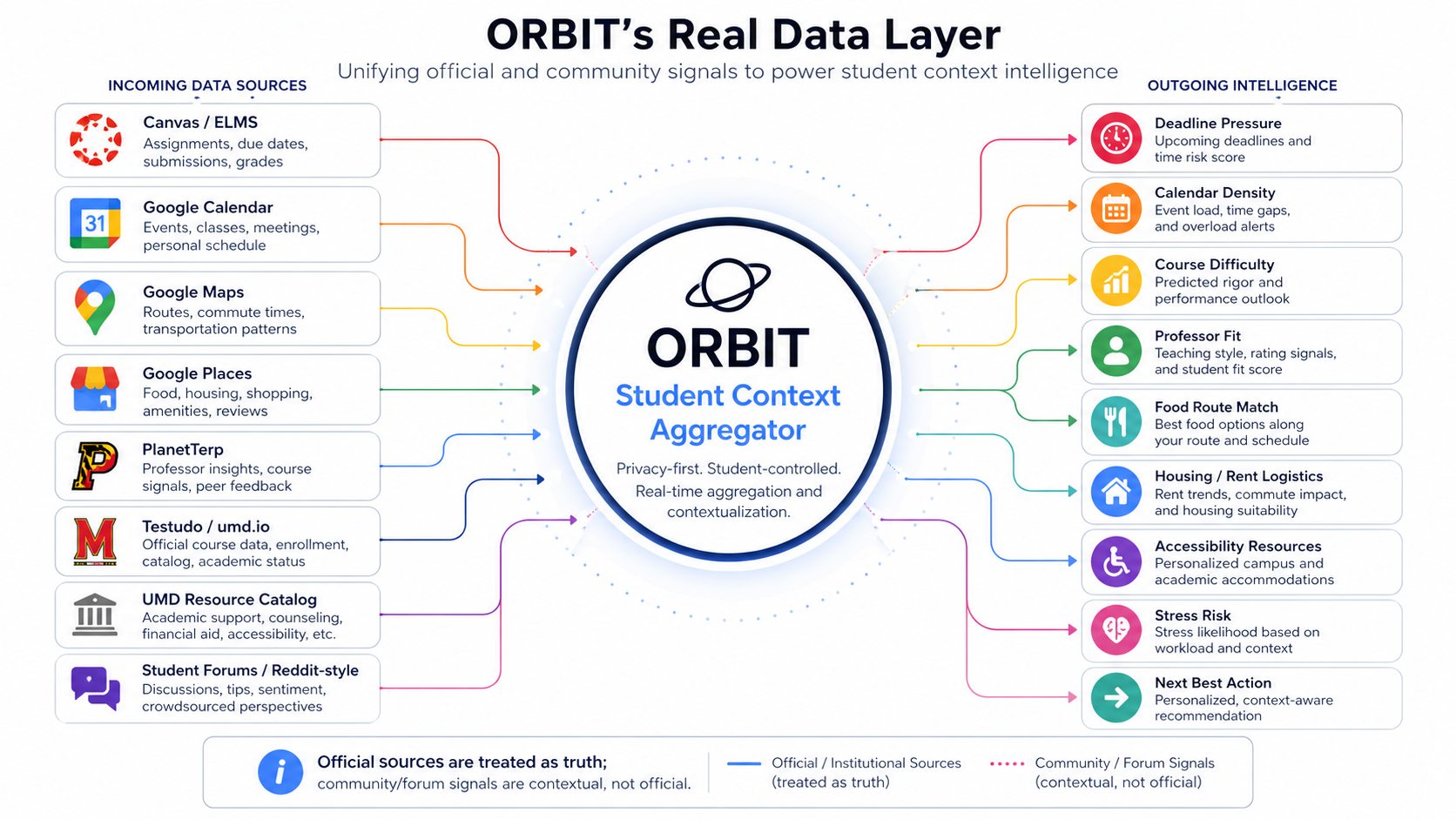
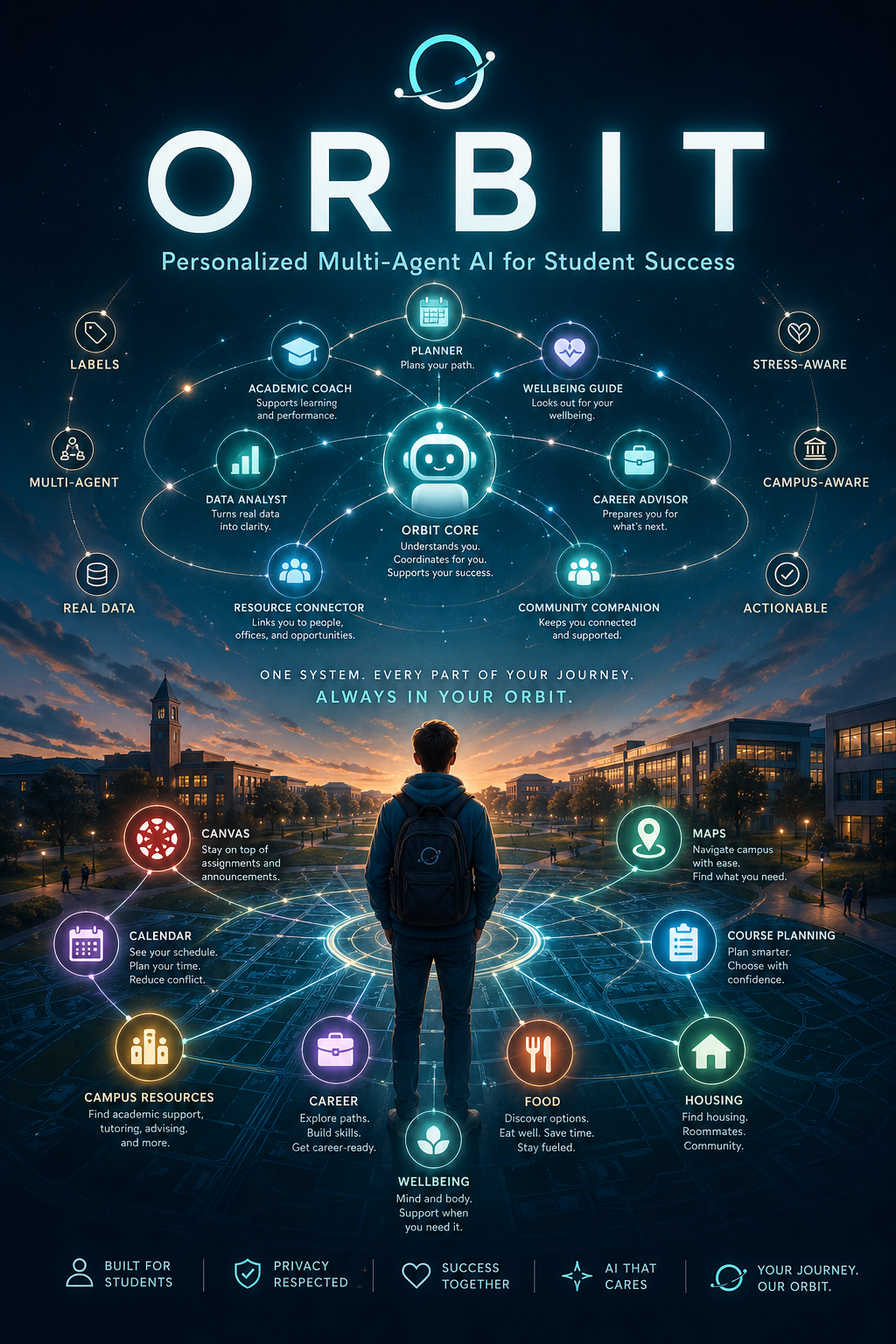
They do not know that one student might be worrying about a CMSC project, a statistics quiz, a work shift, food cost, a walk across campus, and stress at the same time. That was the gap we wanted ORBIT to explore. We wanted to build something that treats student life as a connected system, not as isolated questions.
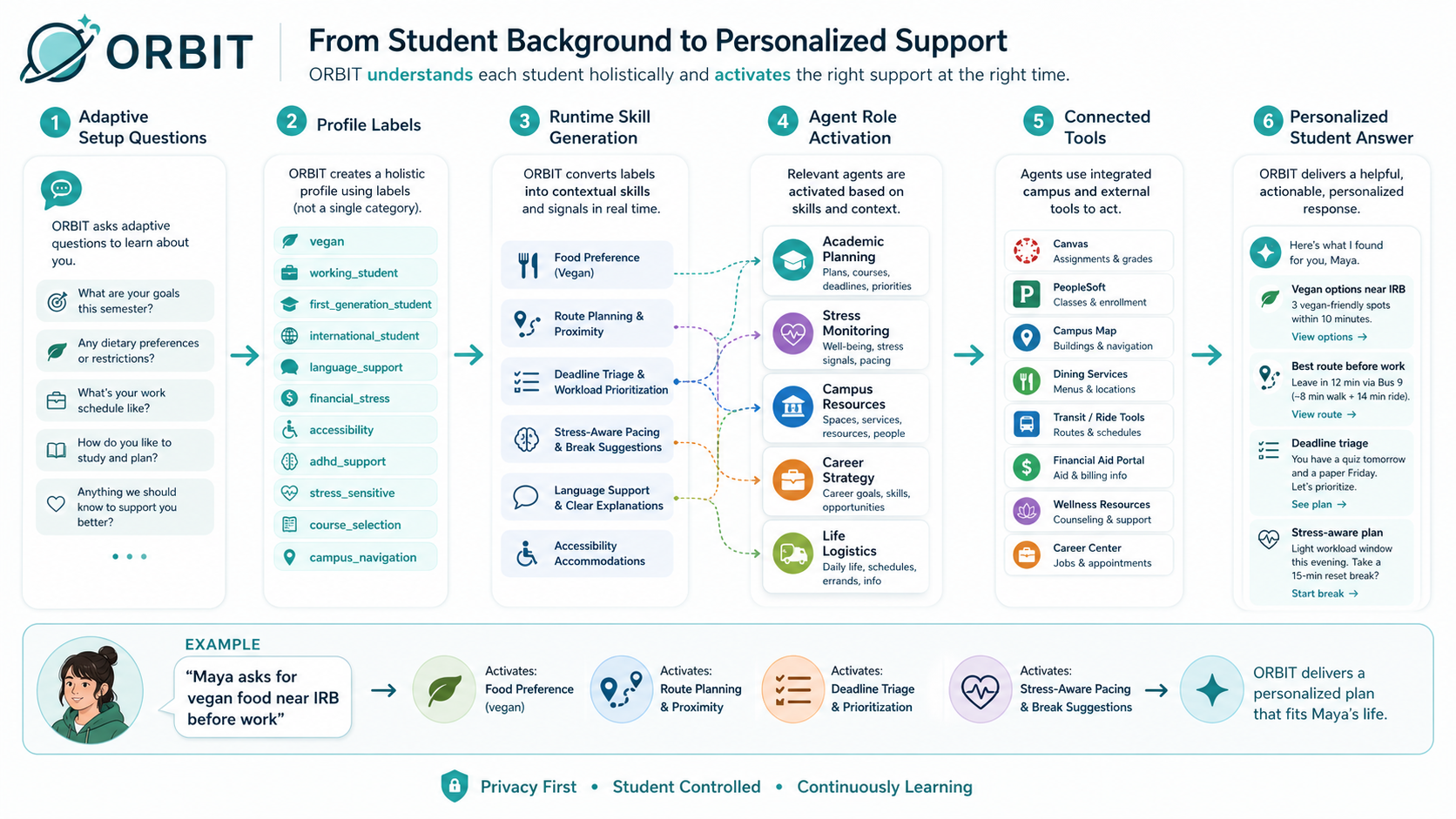
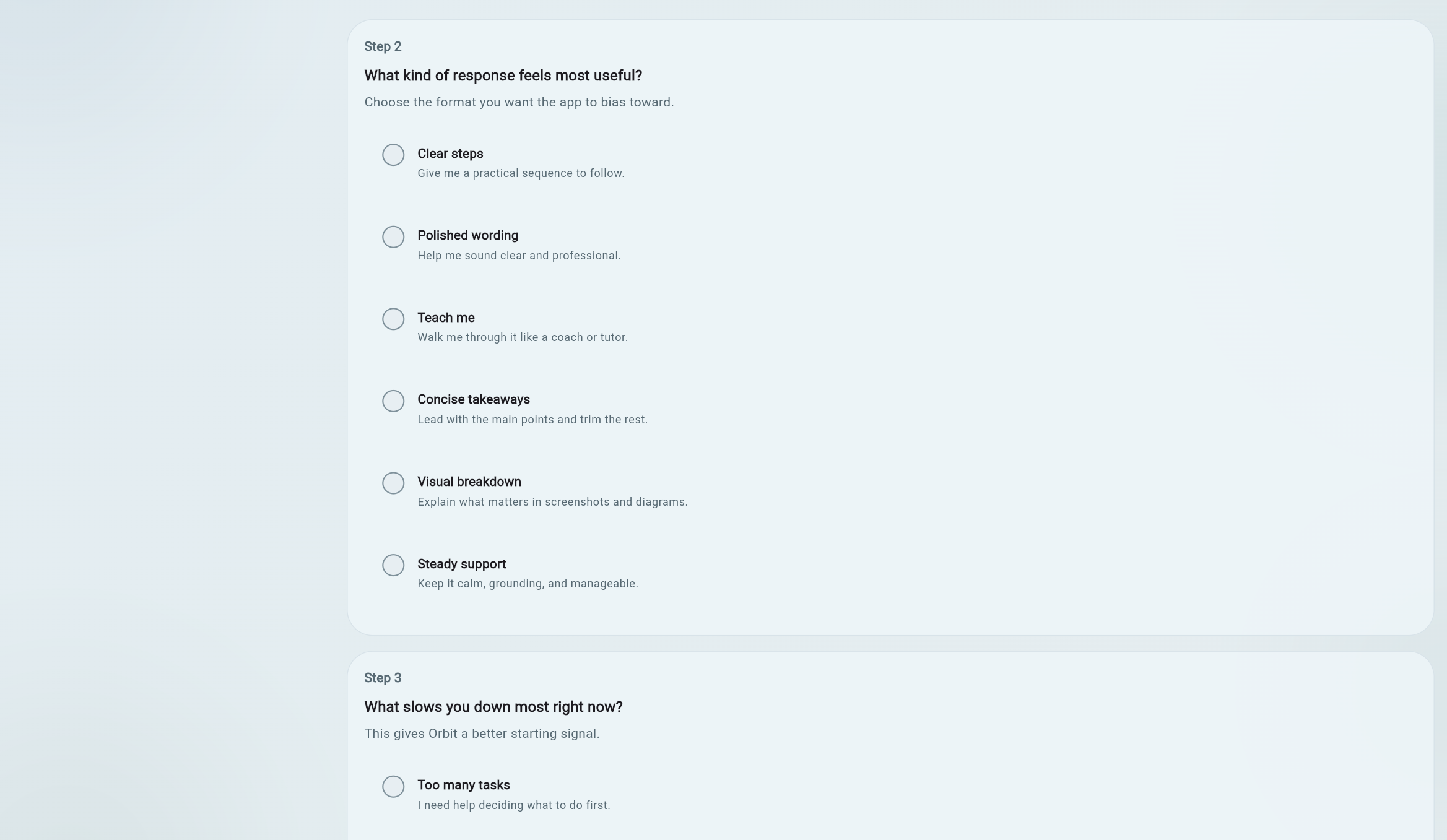
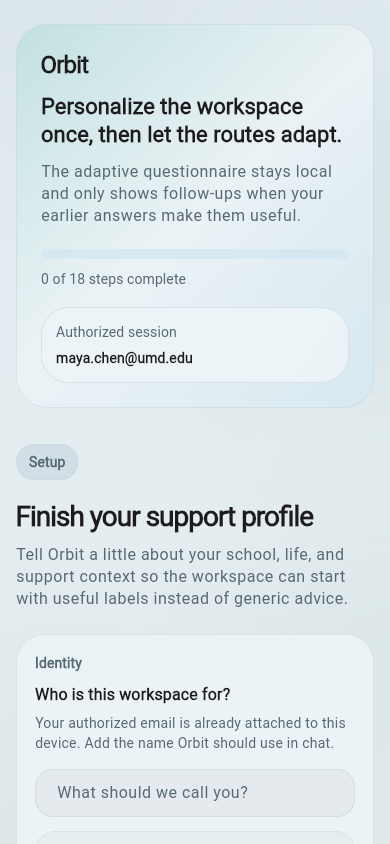
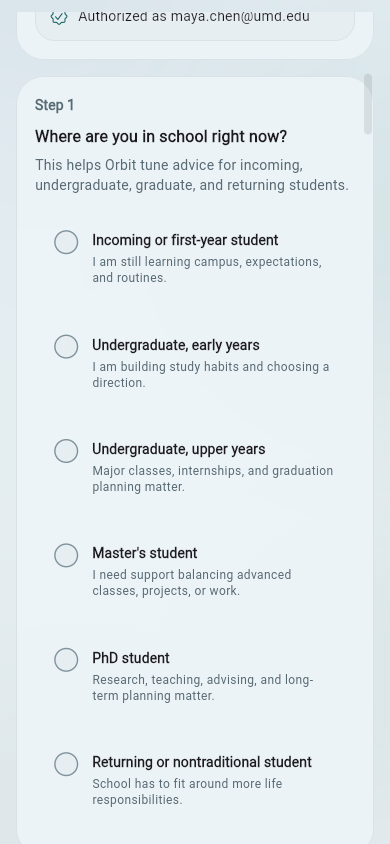
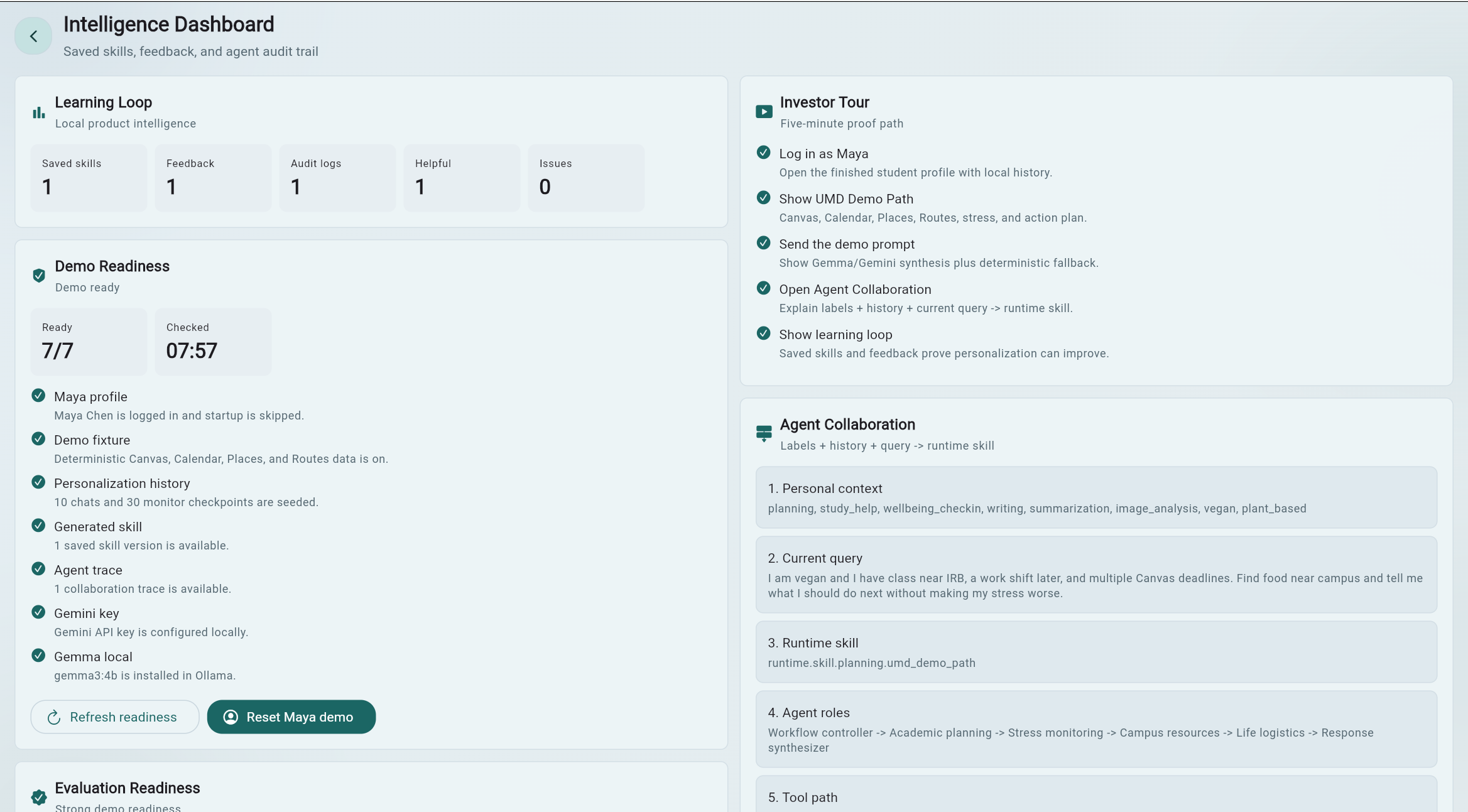
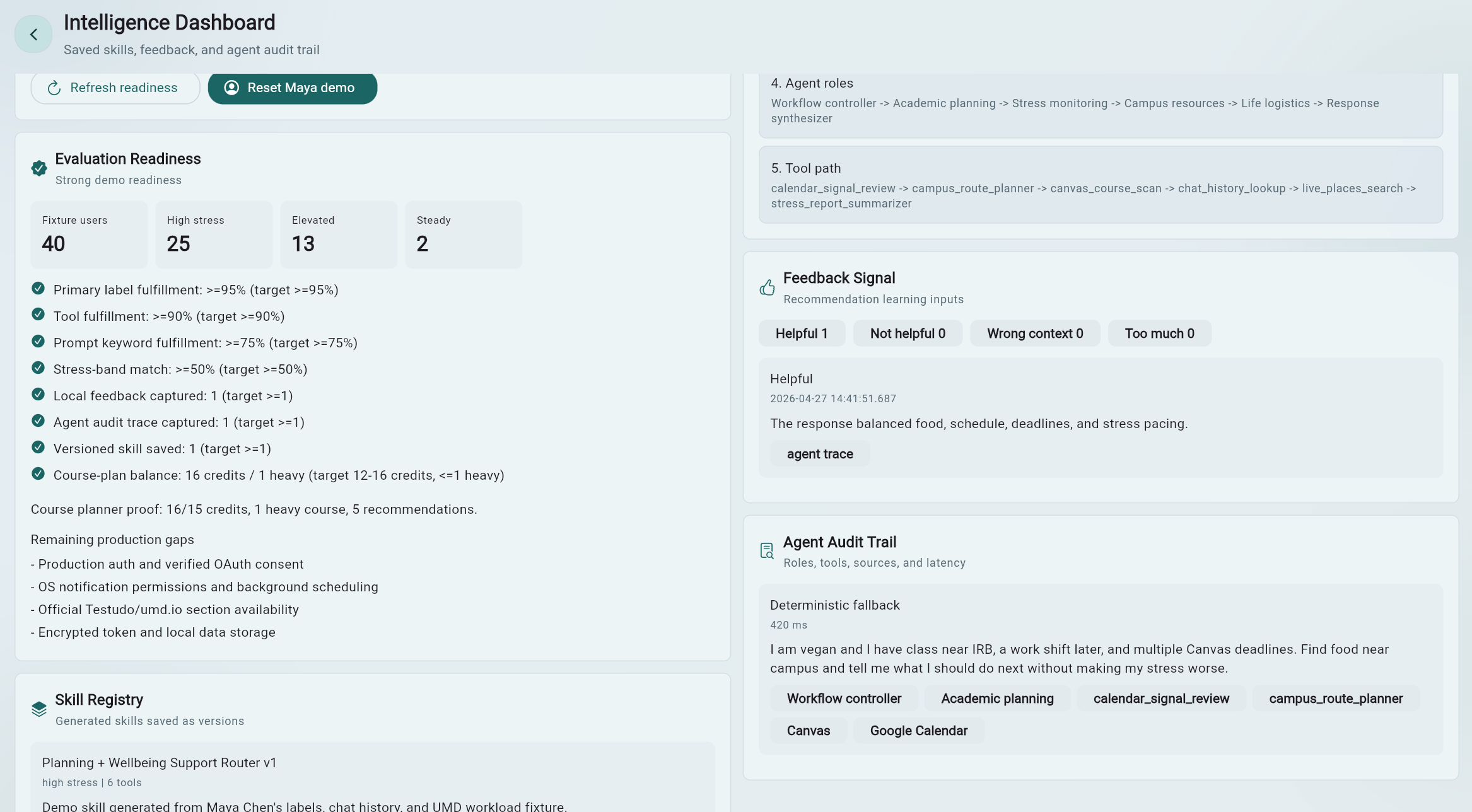
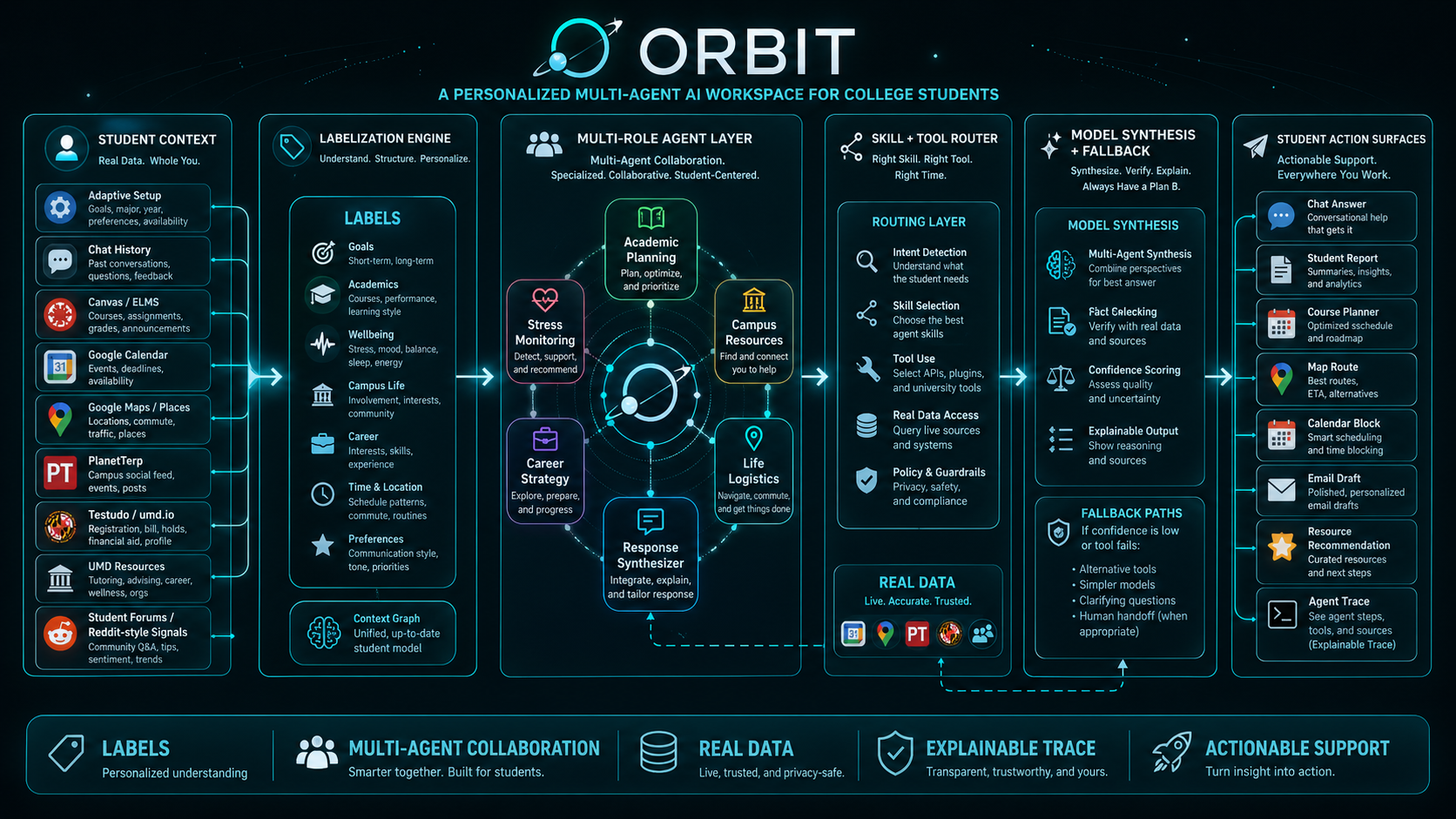
We think the core idea behind ORBIT is labelization. Instead of forcing a student to explain the same context again and again, ORBIT turns important background information into durable labels. These labels can be simple, like vegan, commuter, working student, or course selection, but they are not just decorations on a profile page.
当我们开始构思 ORBIT 的时候,我们并不是只想再做一个 AI 聊天机器人。作为 CS 和 NLP 学生,我们使用过很多 AI 工具, 也承认它们在技术层面非常强大:它们可以快速总结、写作、写代码、回答问题。可是让我们停下来思考的是, 大多数工具仍然从一个空白 prompt 开始。它们并不真正理解学生周围那个混乱、真实、不断变化的环境。
它们不知道一个学生可能同时在担心 CMSC 项目、统计学测验、打工班次、餐费、跨校园步行路线和压力状态。 这正是我们希望 ORBIT 探索的空白。我们想构建一个把学生生活看作连接系统的产品,而不是把每个问题都拆成孤立提问。
我们认为 ORBIT 的核心想法是标签化。与其要求学生一次又一次解释相同背景,ORBIT 会把重要上下文转化成可持续使用的标签。 这些标签可以很简单,比如 vegan、commuter、working student 或 course selection,但它们并不只是资料页上的装饰。